
ACLS and PALS
Run arrest, bradycardia, tachycardia, ROSC, pacing, and defibrillation scenarios with live rhythm and vital sign changes.
ACLS monitor simulatorCardiac simulator app
BoxVitals is a cardiac simulator app for instructors who need realistic monitor practice without a full mannequin setup. Use it for ACLS, PALS, EMS, nursing, and simulation lab scenarios where learners need to interpret rhythms, vitals, 12-leads, pacing, and defibrillation decisions in context.
Training use cases
The app pairs an instructor-controlled scenario surface with a learner-facing monitor, so the patient can deteriorate, respond to treatment, or reveal new findings as the team makes decisions.
Run arrest, bradycardia, tachycardia, ROSC, pacing, and defibrillation scenarios with live rhythm and vital sign changes.
ACLS monitor simulatorPractice prehospital monitor operation, transport decisions, 12-lead acquisition, and communication during realistic cases.
EMS patient monitor simulatorUse monitor trends, telemetry changes, deterioration, and escalation cues in nursing and rapid response scenarios.
Nursing simulation monitorMonitor workflow
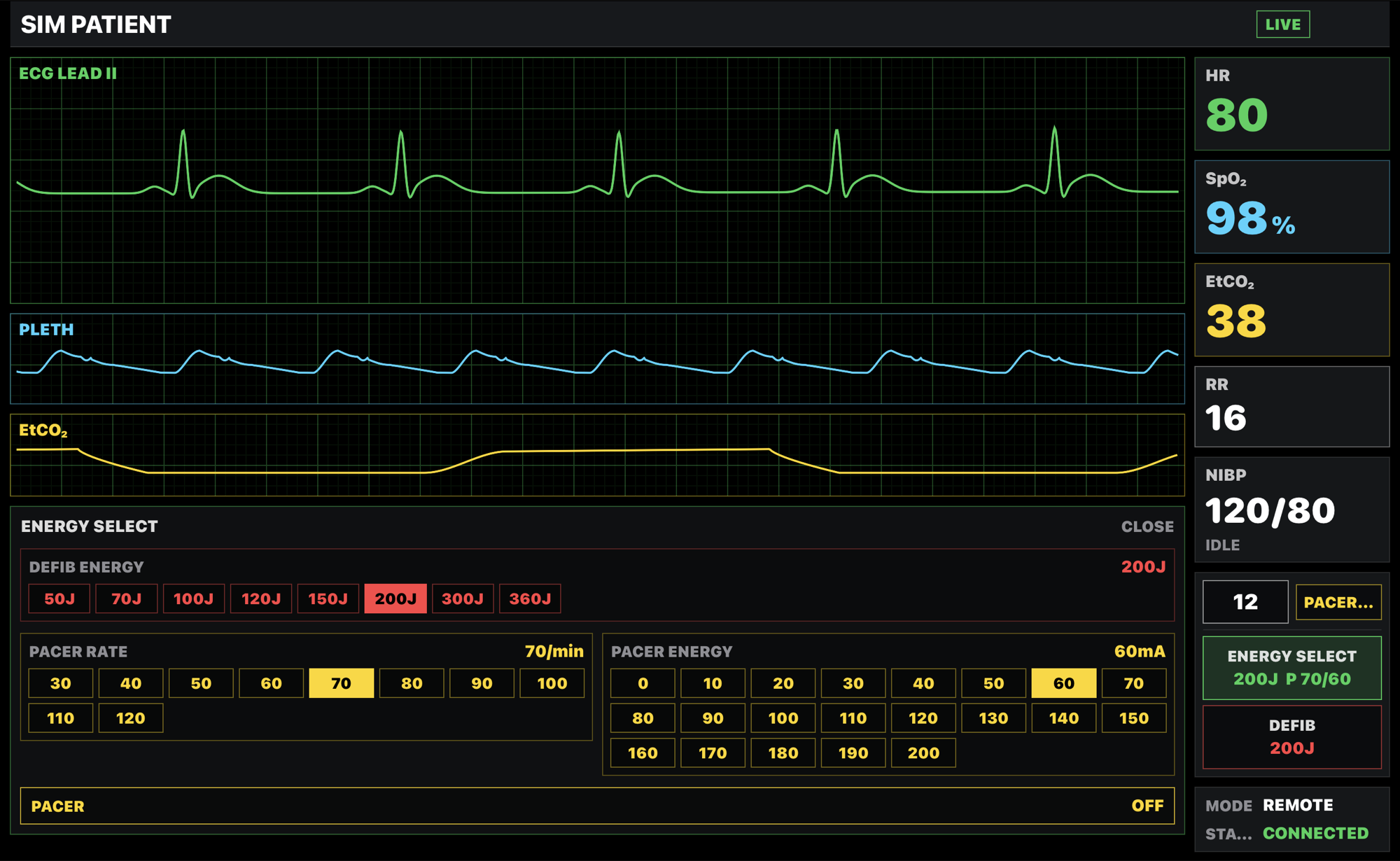
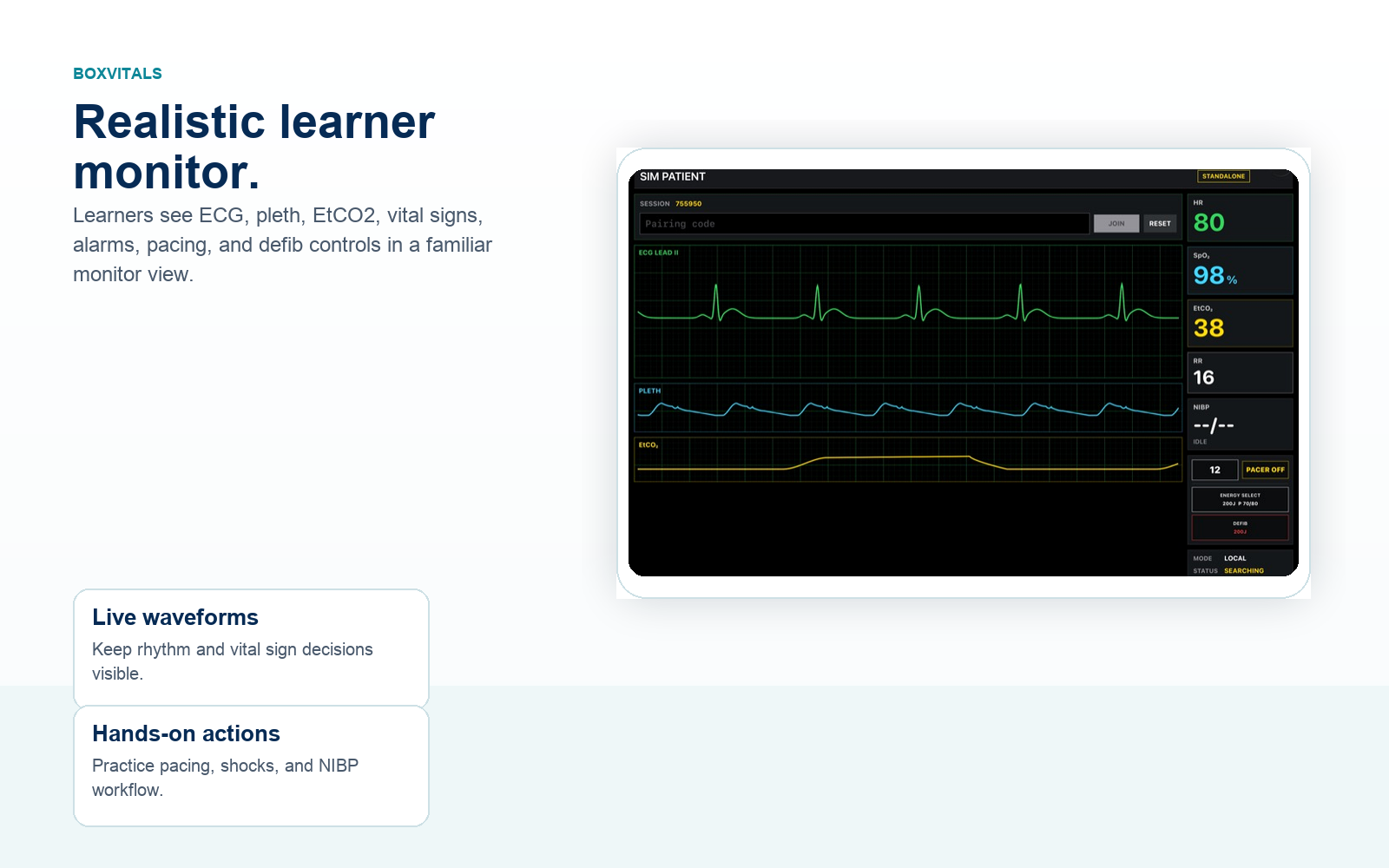
BoxVitals is designed around the live monitor experience: moving ECG waveforms, vital sign trends, rhythm changes, pacing, defibrillation, and 12-lead practice.
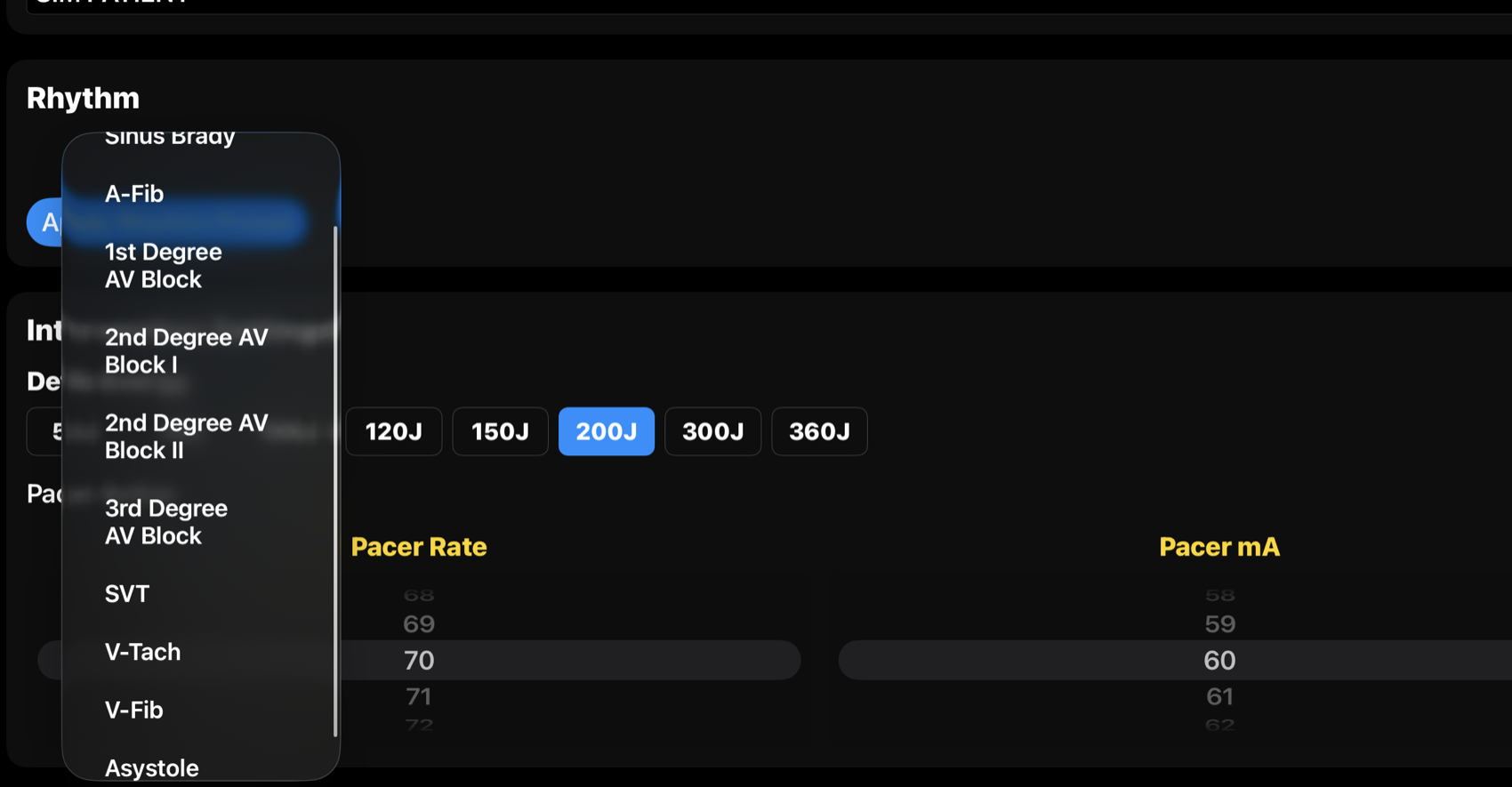
Change ECG rhythm, heart rate, blood pressure, SpO2, EtCO2, respiratory rate, defib energy, pacing, and scenario state.
Give students a monitor view that feels familiar: waveforms, vitals, alarms, NIBP, pacing, synchronized cardioversion, and shocks.
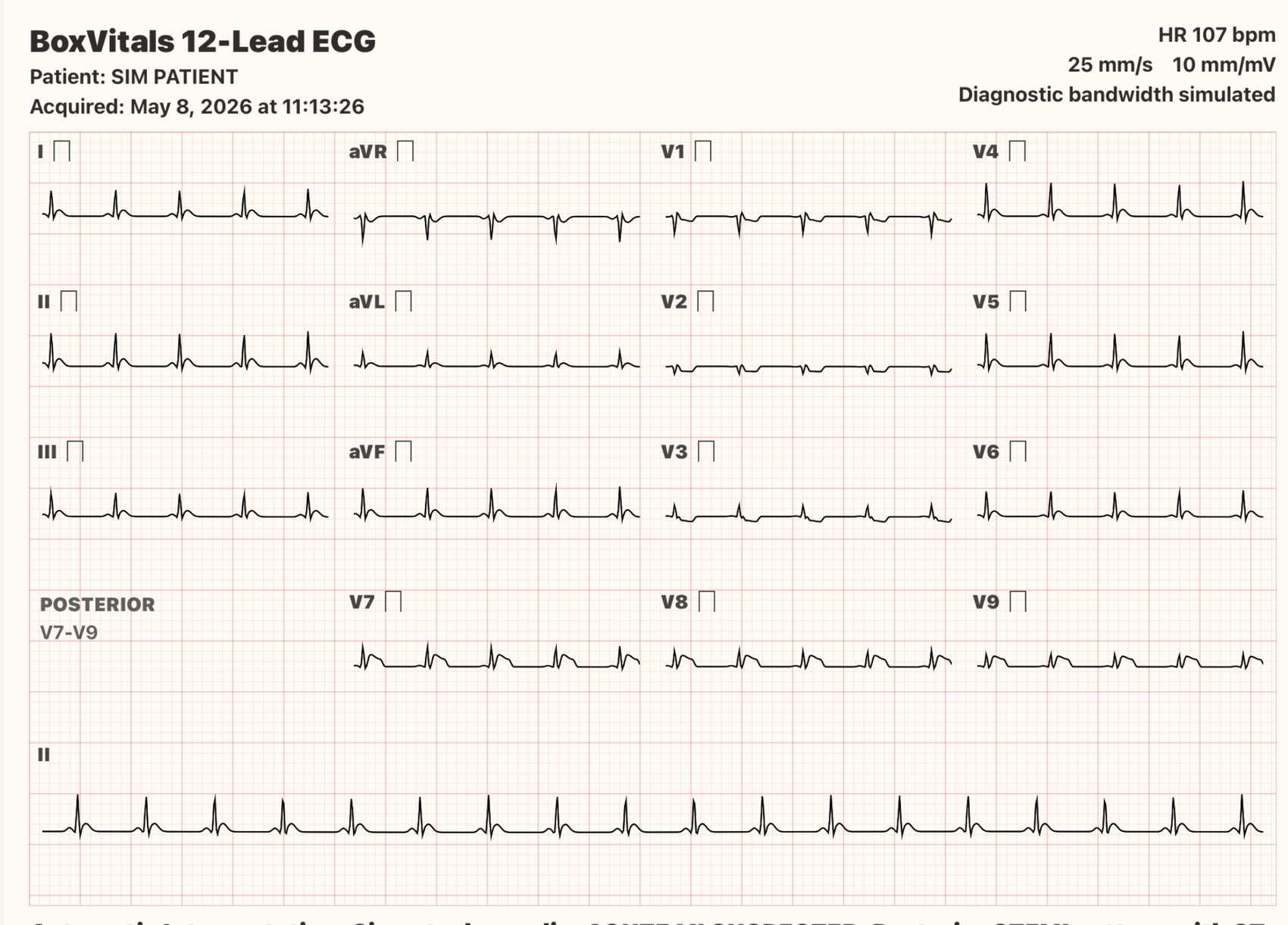
Build 12-lead acquisition and interpretation into the case instead of keeping ECG practice separate from patient care.
Use native devices for responsive training and browser-based monitor screens for mixed-device classrooms and projected demos.